
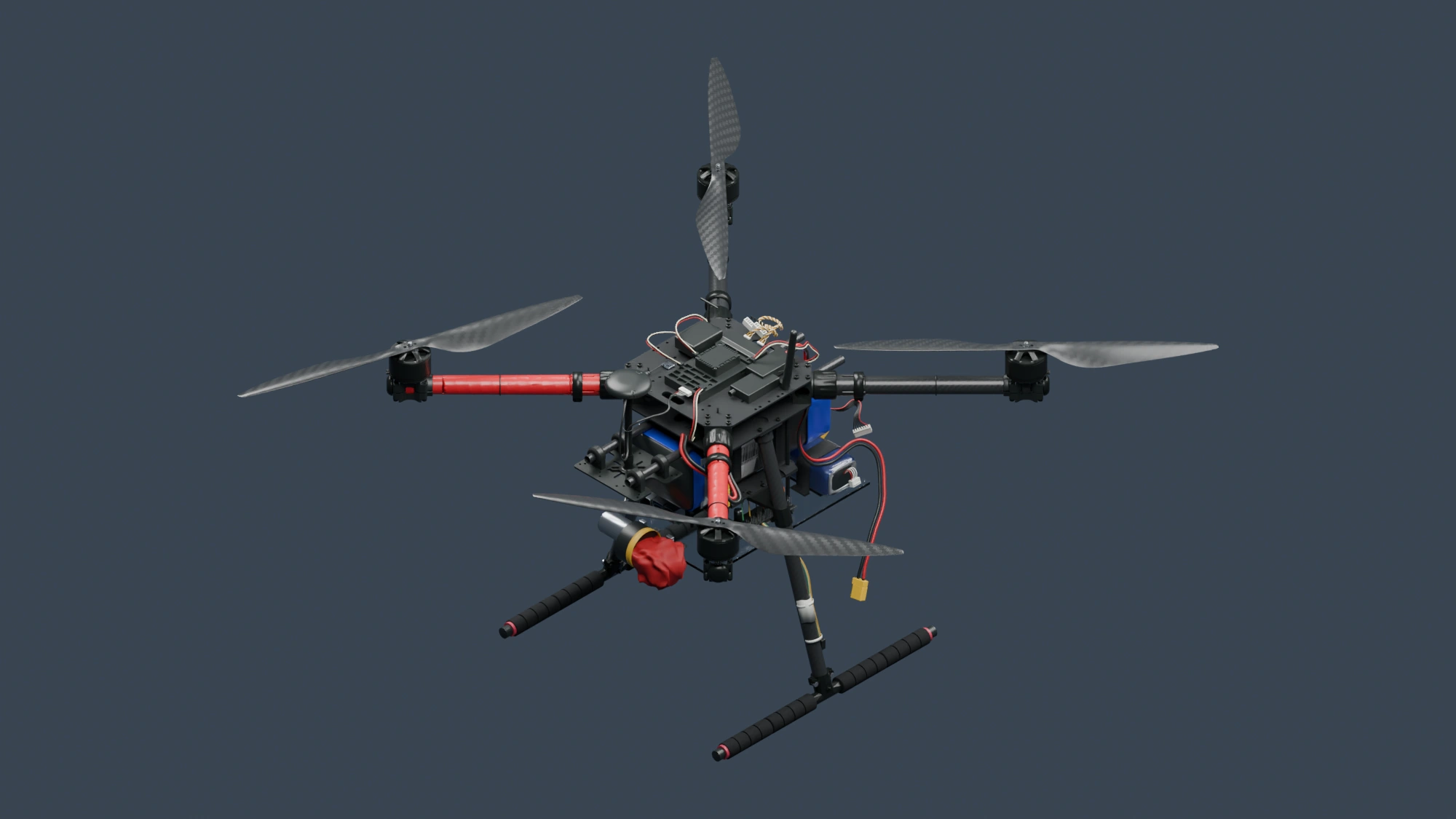
UAV 1.0
An X650 quadrotor combined aerial perception, a modified robotic arm and marker-based landing for operation alongside the boat.
Explore UAV 1.0 →With three months between handover and competition, we rebuilt critical subsystems around manoeuvrability, perception and integration. RobotX 2024 became a testbed for the ideas, practical experience and engineering handover that would support future AAV teams.
An X650 quadrotor combined aerial perception, a modified robotic arm and marker-based landing for operation alongside the boat.
Explore UAV 1.0 →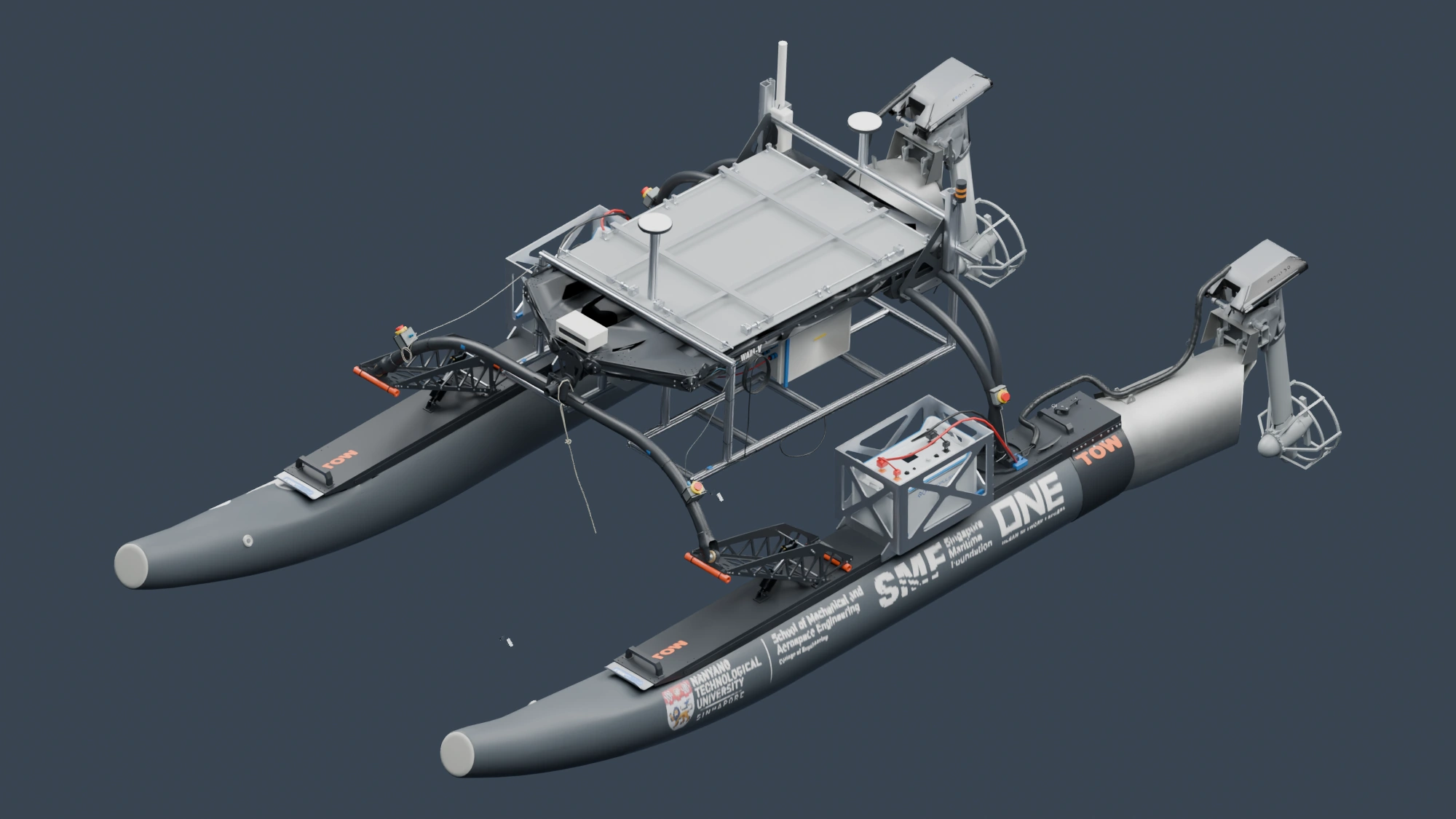
The WAM-V carried new propulsion, stereo perception, a racquetball launcher and a securing dock for the UAV.
Explore USV 1.0 →An aerial build for carrying a manipulator and returning to a moving platform.
Explore UAV 1.0 →We adapted the five-degree-of-freedom arm with a tin-specific gripper and recalculated its inverse kinematics for the X650 frame. The mechanism connected aerial positioning with physical pickup and release.
Water-activated flotation devices supported recovery after an unexpected water landing. Their automatically inflated floats kept the aircraft at the surface for retrieval, adding a practical safeguard for operations around the boat.
Deck integration balanced propulsion, sensing and the space needed by the aircraft.
Explore USV 1.0 →Custom engine pods supported the heavier Navy 3.0 Evo propellers. Parallel mounting provided differential drive, while relocating protected electronics below the payload tray freed the deck for sensors and aircraft operations.
Four stepper motors moved clamping rods towards the UAV's legs. The dock was designed to secure the aircraft during surface operations and release it for launch from the WAM-V payload tray.
A flywheel launcher and drum reload mechanism were retrofitted to an inherited barrel structure. The campaign prioritised reliable actuation; accurate trajectory planning and powered barrel aiming remained follow-up work.
The USV distribution network supplied propulsion and stepped-down branches for onboard equipment. Relay-controlled solid-state switches allowed propulsion power to be cut remotely. The CubeOrangePlus also controlled the status lights.
Pixhawk 6X, M9N GPS and separate radio control formed the UAV's flight interface. Operators could take control directly through the flight controller if the companion computer or autonomous mission needed intervention.
Perception and flight interfaces linked the aircraft's observations with its actions.
Explore UAV 1.0 →An Arducam 64 MP camera supplied images to a Raspberry Pi 4B running OpenCV and TensorFlow. An ultrasonic sensor supplied distance information after the earlier stereo camera was removed from the aircraft.
The design used PX4 and MAVLink for survey planning and precision landing with visual markers. These interfaces connected the navigation solution to the boat's landing dock and retained a direct path to manual control.
The surface stack converted forward observations into waypoint-based movement.
Explore USV 1.0 →ZED 2i imagery and point clouds supported object localisation. Detection confidence and repeated frames filtered observations before the planner used them, reducing dependence on a single image of a buoy or docking panel.
Inherited VRX logic was adapted to output waypoints. A repulsion-weighted A* graph handled obstacles, while docking used a plane estimated from stereo observations because this USV did not carry LiDAR.
A consolidated ground-station interface displayed vehicle status and supporting diagnostic information. Maritime radio links connected onboard computers to operators, while the UAV video feed helped expose software problems during integration.
The original report covers the design, integration and testing behind this campaign.
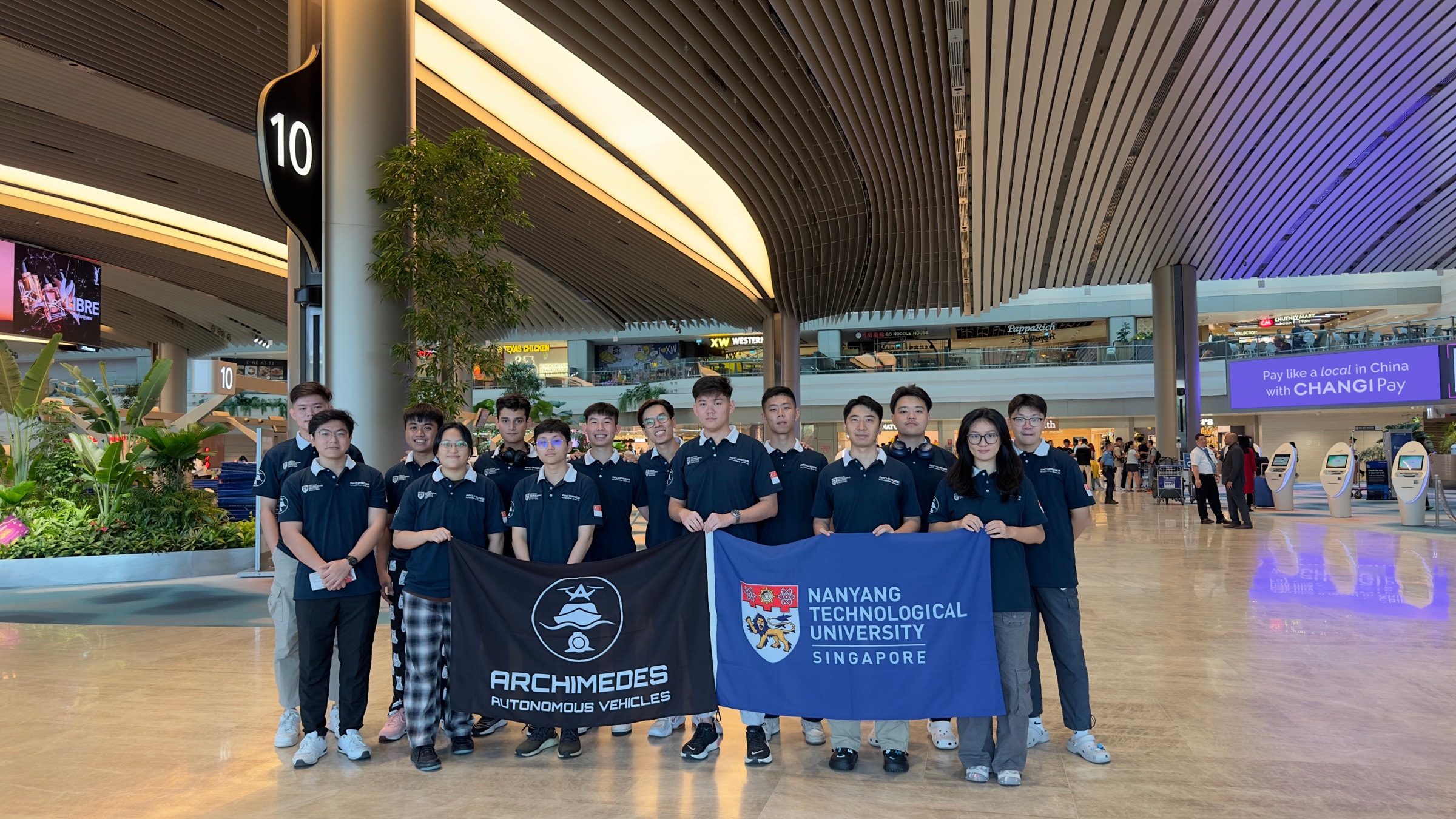
The 2024 team brought the two-vehicle system to Sarasota and passed its integration experience to the campaigns that followed.
Campaign achievements →Continue to RobotX 2026 →