
Perception and navigation
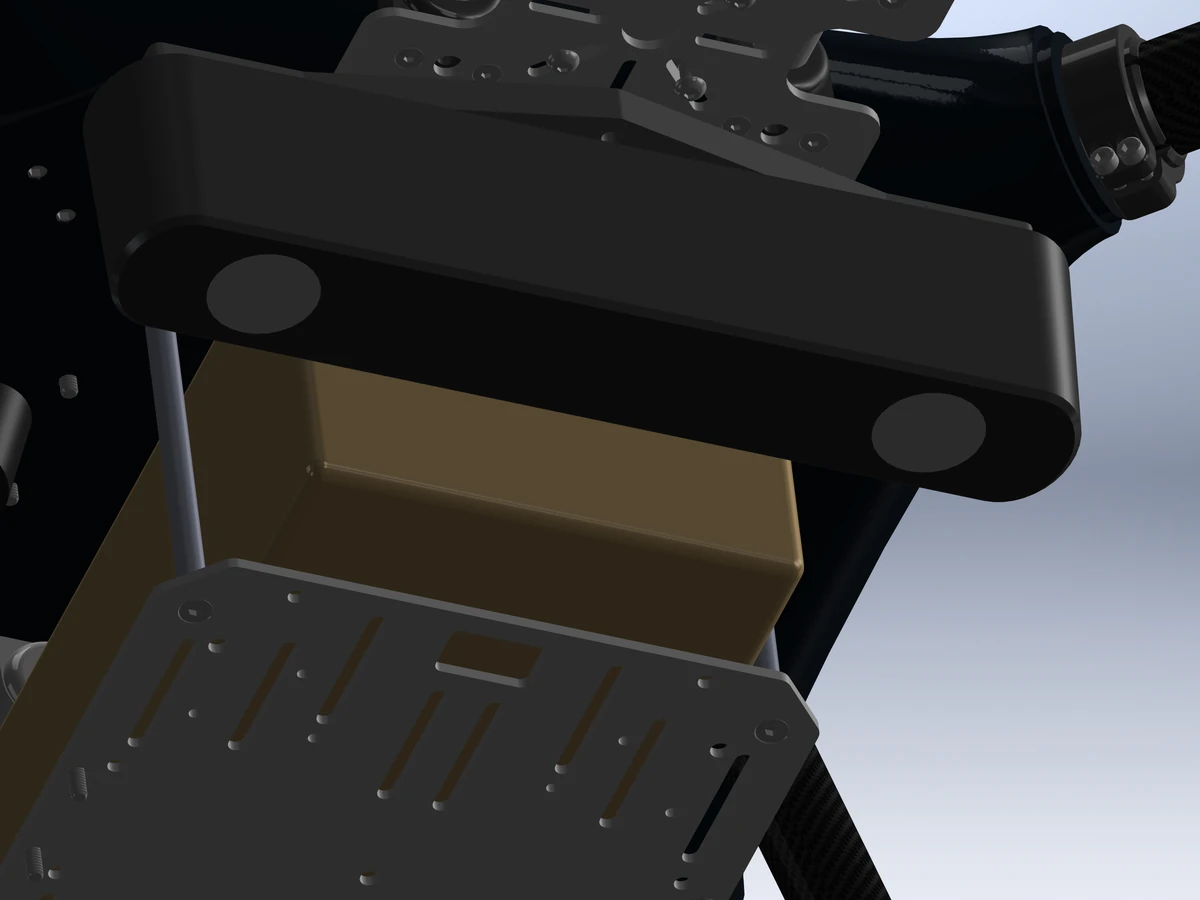
The downward ZED 2i camera observes markers and delivery areas. Together with F9P positioning, it supports aerial mapping for the fleet.
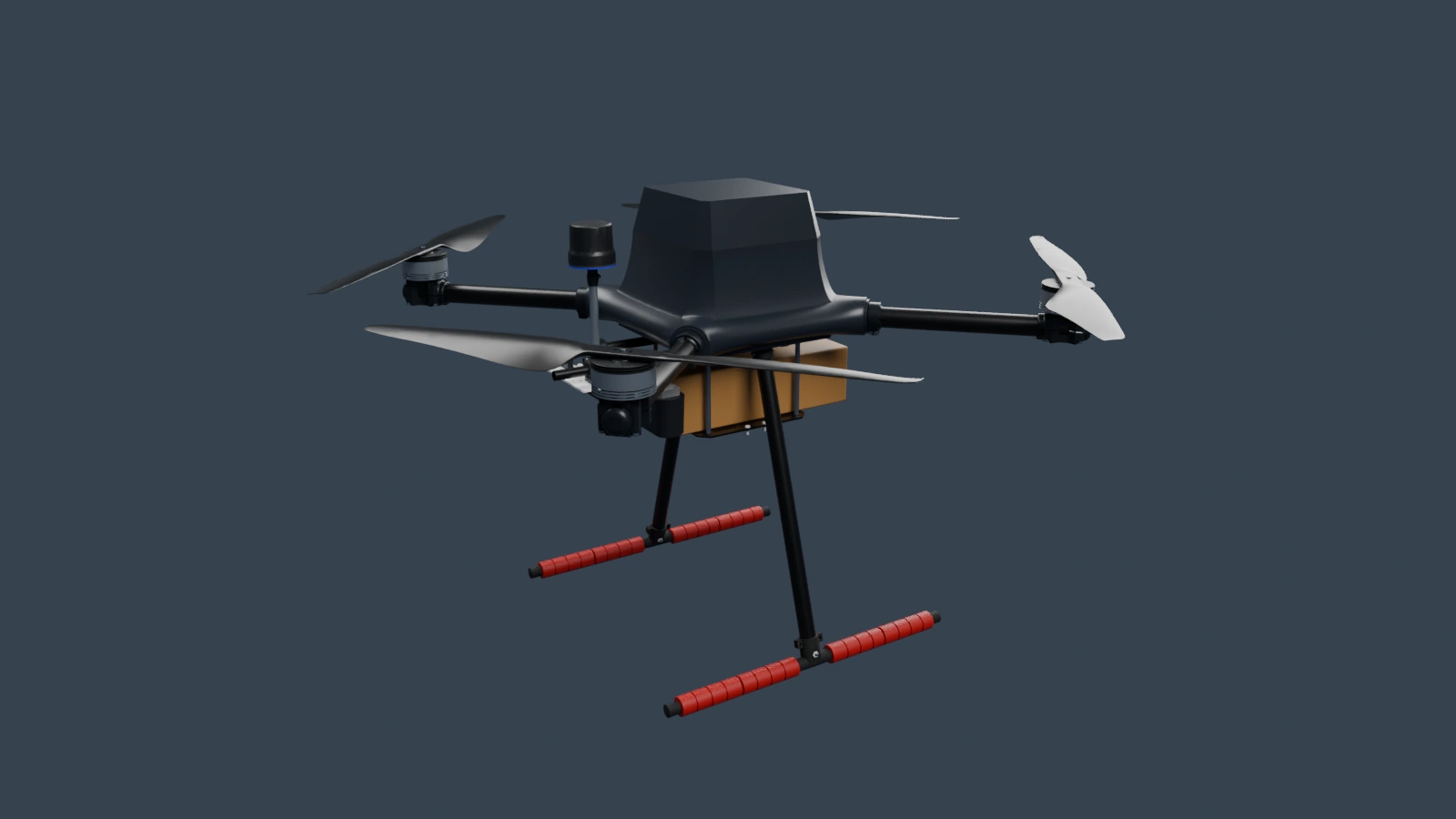
Rotatable view of the supplied UAV 3.0 STEP assembly, with materials guided by the latest vehicle references.
Use your mouse or trackpad: drag to rotate, scroll to zoom.Drag to rotate. Pinch to zoom. With the model focused, use arrow keys to rotate, + or - to zoom, Home to reset, and Escape to leave the model.
Waterproof MN4110 motors
P17×5.8 carbon fibre
GNSS receiver
Pixhawk 6X
Waterproof motors, a fully enclosed electronics package and F9P positioning prepare the aircraft for maritime operations. A new gripper is being developed for RobotX tin retrieval and delivery, building on the stereo-camera and computing stack developed for SUAS.
The downward ZED 2i camera observes markers and delivery areas. Together with F9P positioning, it supports aerial mapping for the fleet.
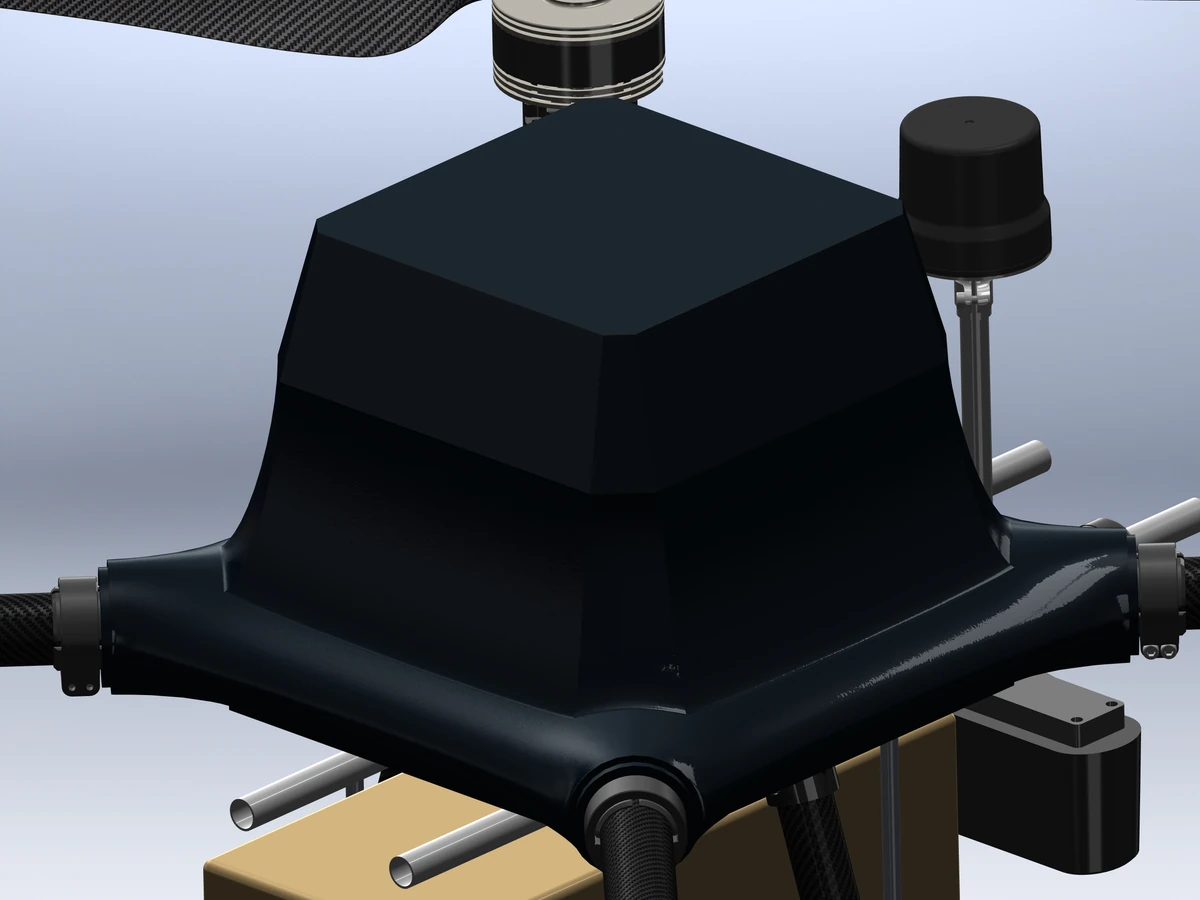
Separate power branches supply propulsion and electronics. A custom enclosure houses the flight controller, computer and wiring, balancing weather protection with service access.
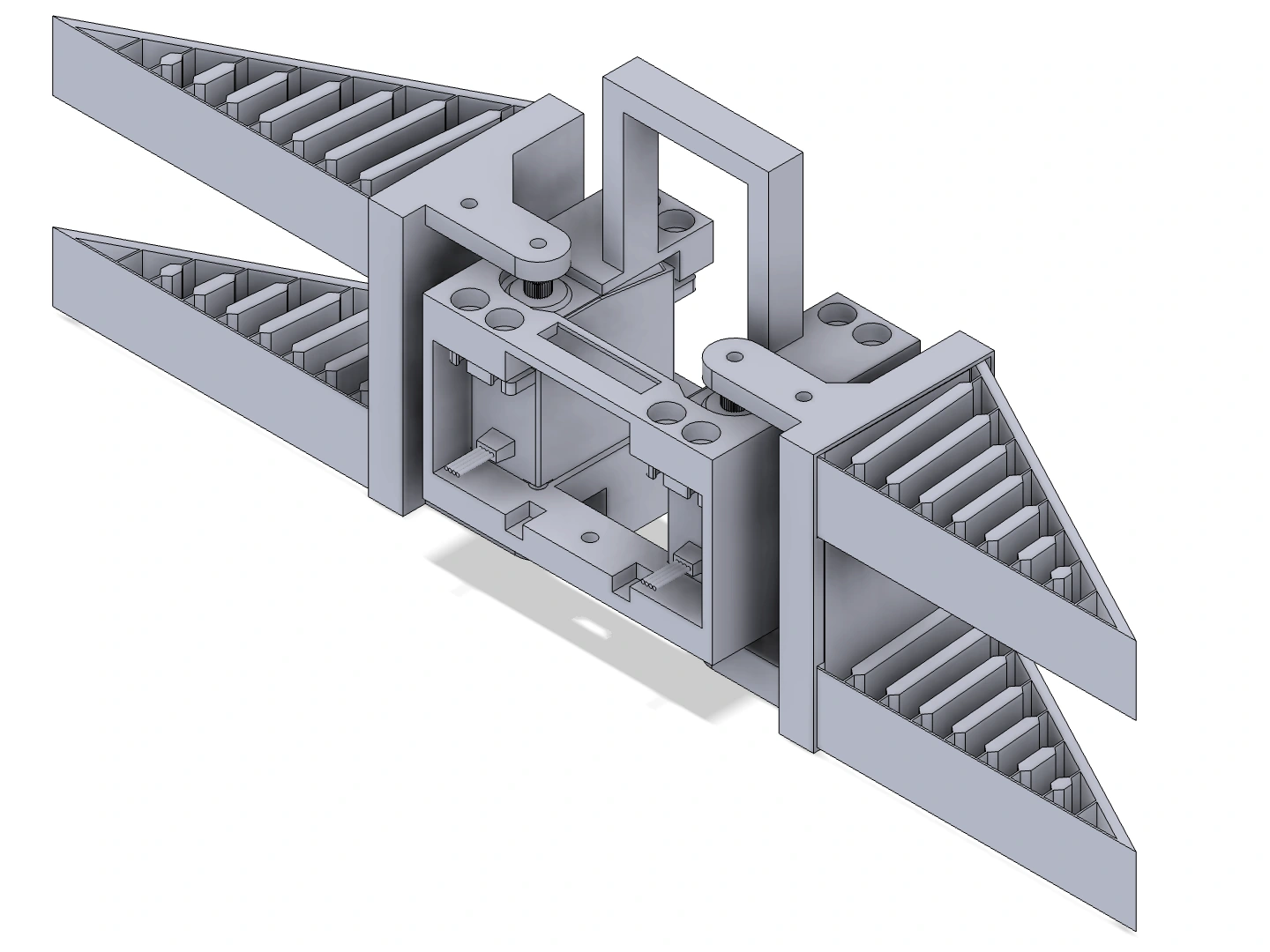
A gripper is in development for supply-tin pickup and release. Visual alignment guides the approach; testing must verify each physical pickup and release.
Four MN4110 motors and 17-inch propellers provide lift. PX4 on the Pixhawk 6X stabilises flight, separate from the companion computer’s perception and mission software.
Wi-Fi connects to shore; SiK radio carries compact messages to the USV. The safety pilot uses a separate manual-control link.
The Jetson processes images and requests flight through one PX4 interface. The mission design schedules observation and delivery around control authority, flight reserve and safe recovery.