Skip to content
HomeVehiclesUSV 2.0
Sea

USV 2.0

Designed for surface navigation, precision manoeuvring and targeted water delivery.

Generation 2 · In build · RobotX 2026
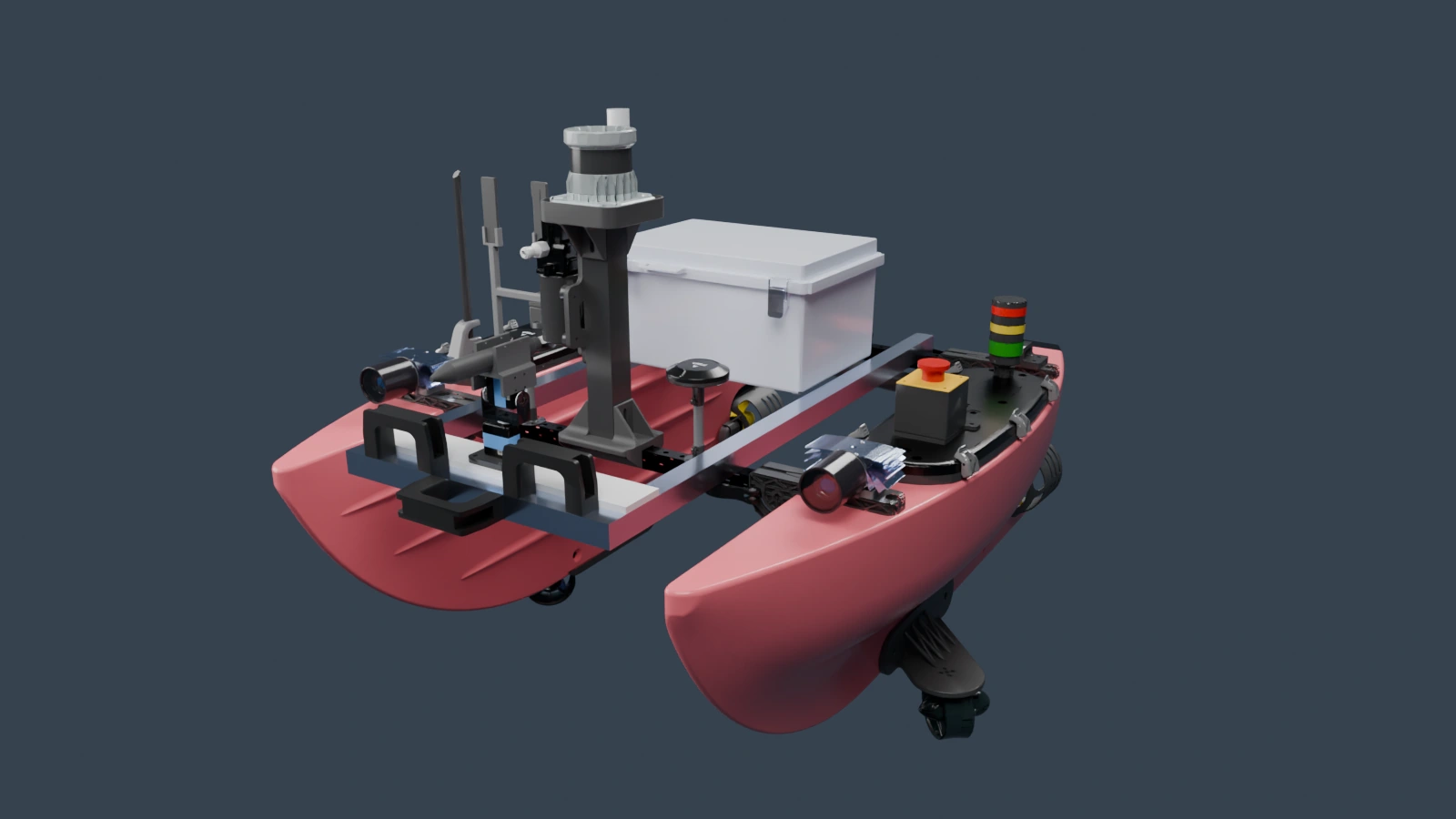
USV 2.0 CAD showing coral twin hulls, four thrusters, LiDAR, cameras and the protected electronics enclosure.

Rotatable view of the supplied USV 2.0 GLB assembly, with source materials retained in a web-optimised export.

Use your mouse or trackpad: drag to rotate, scroll to zoom.Drag to rotate. Pinch to zoom. With the model focused, use arrow keys to rotate, + or - to zoom, Home to reset, and Escape to leave the model.

Thrusters
4

Two stern, two angled

Cameras
2

Independent Basler views

LiDAR coverage
360 °

Ouster scanning LiDAR

GNSS receivers
2

Position and heading

How it works.

What changed from USV 1.0

A new surface build combines four thrusters, 360° LiDAR and paired cameras for closer control around task equipment. Water delivery replaces the earlier ball launcher, while radio and acoustic links connect the three-vehicle fleet.

Perception and navigation

Two Basler cameras read objects and light signals; Ouster LiDAR measures obstacle geometry. Dual F9P receivers provide position and antenna-baseline heading, including while stationary.
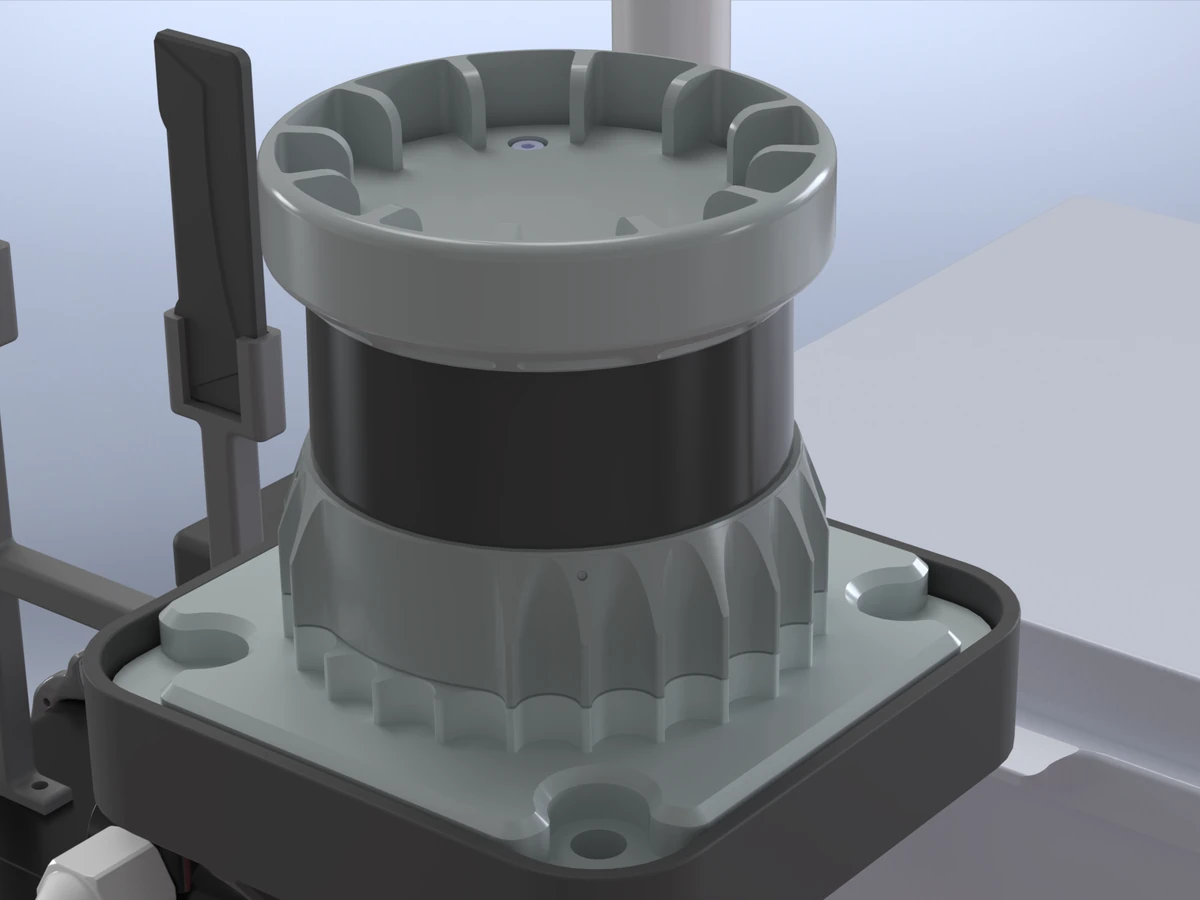
Ouster LiDAR on the USV perception mast

Propulsion and control

Two stern thrusters provide forward drive; two diagonal T200s add lateral force. Custom allocation is in development to combine all four for forward, sideways and turning commands.
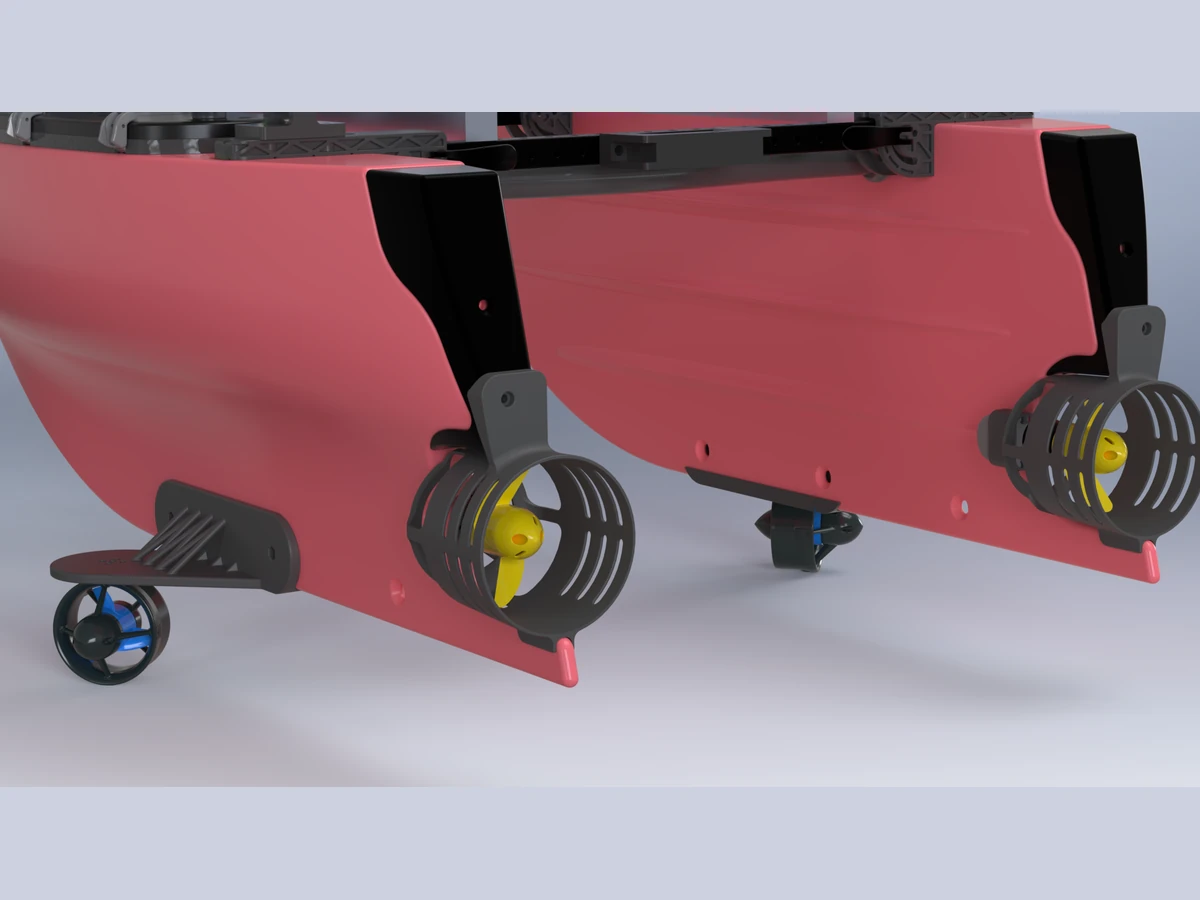
USV stern thrusters and added angled thruster mounts

Power and protection

Our distribution board supplies electronics separately from propulsion. The safety design inhibits actuators while keeping computers and sensors powered for fault diagnosis.
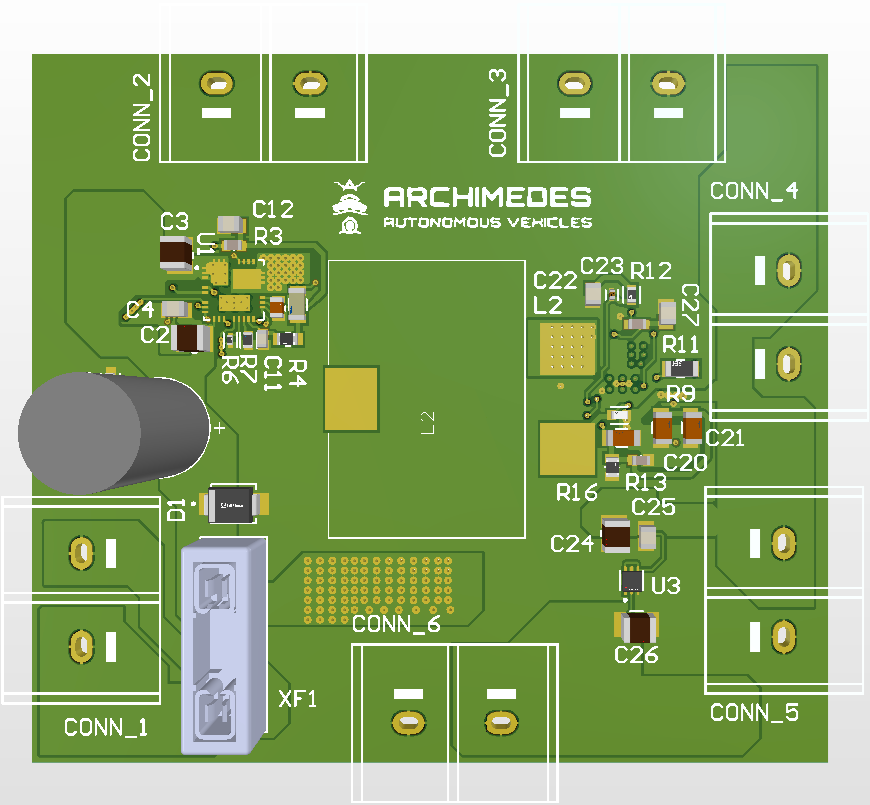
USV 2.0 power distribution board, top view with voltage-regulation components and power connections

Communications

Shore radio carries network traffic, SiK links to the UAV, and an M16 modem links to the submerged UUV. Raw camera and LiDAR data stays onboard.
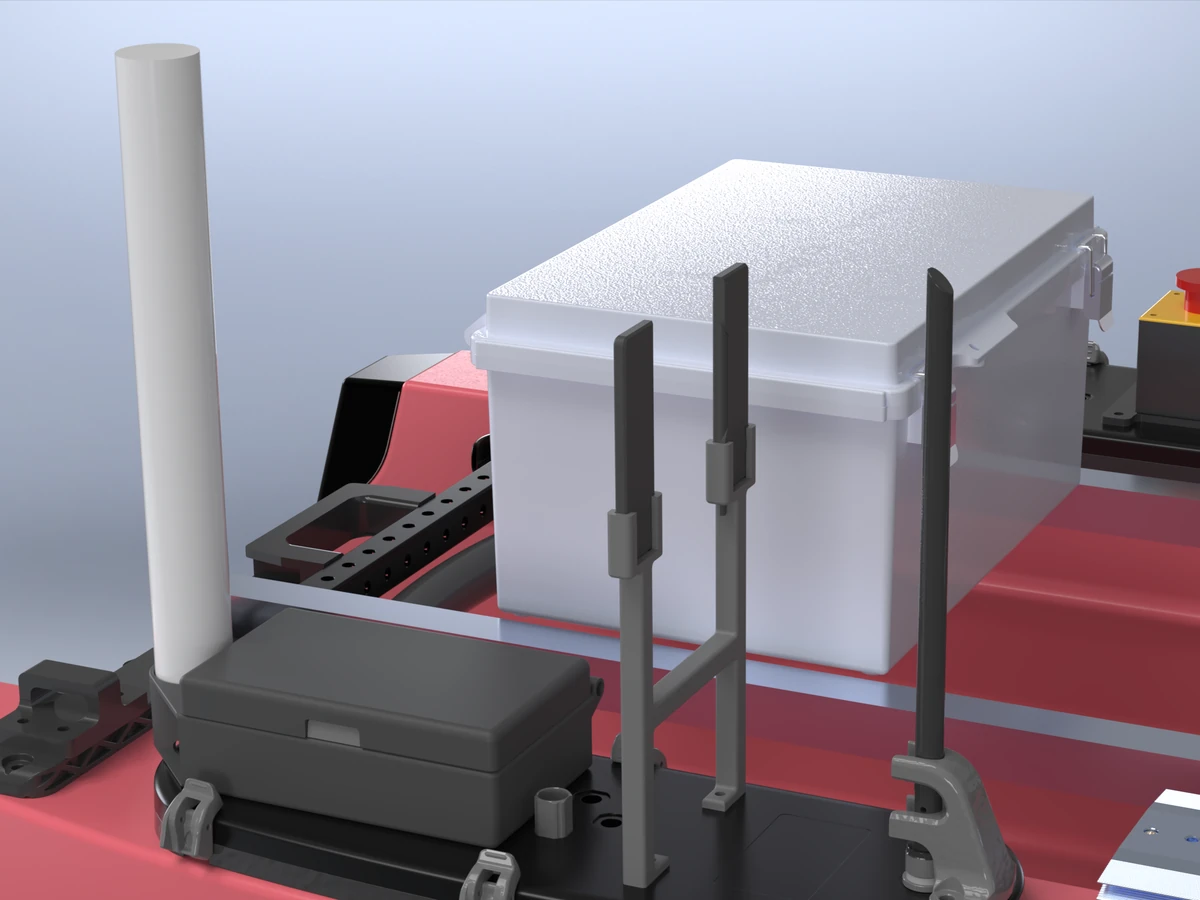
Protected communications equipment and electronics on the USV deck

Onboard autonomy

The Jetson separates geometric collision checks from object classification. Route planning handles transit; a precision controller is in development for close positioning. Obstacle avoidance need not depend on recognising an object.
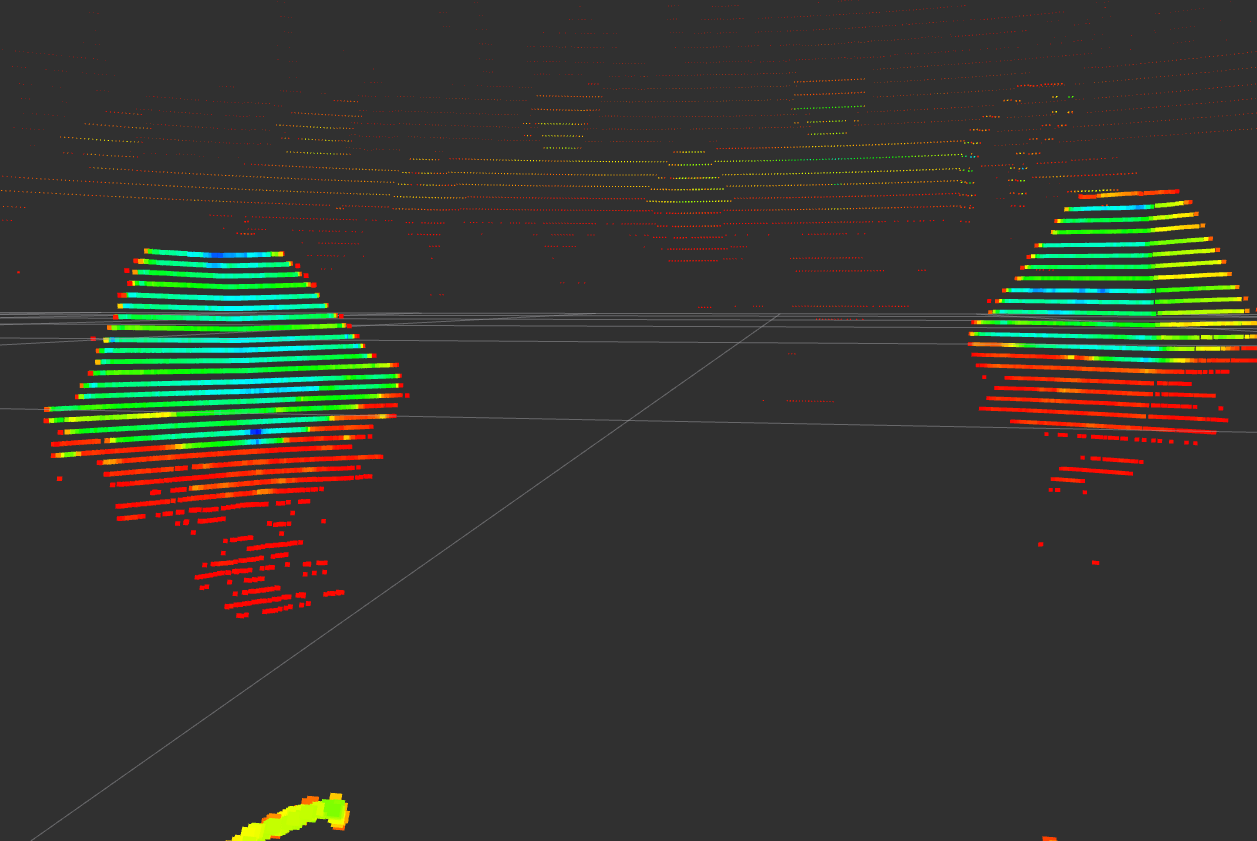
Colour-mapped LiDAR returns outlining two RoboBuoys during a physical sensor capture

Acoustic sensing

An analogue front end conditions four hydrophone signals for pinger localisation. Arrival-time differences indicate direction. This passive sensing system is separate from the underwater communications modem.
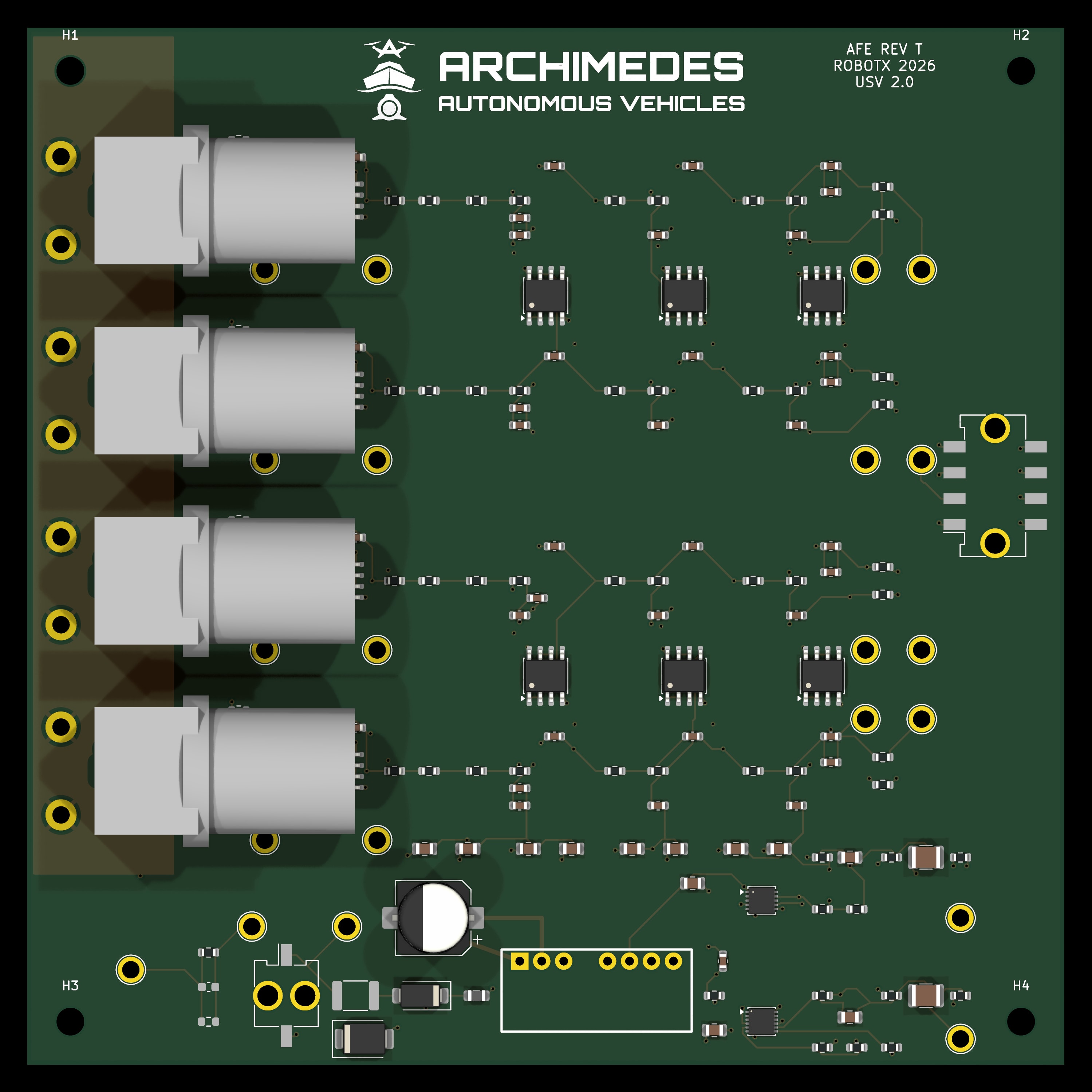
USV 2.0 four-channel analogue front-end PCB with hydrophone inputs

Water delivery

A pump feeds the forward nozzle. The control design combines visual alignment and vessel positioning to aim the jet, with target response confirming completion.
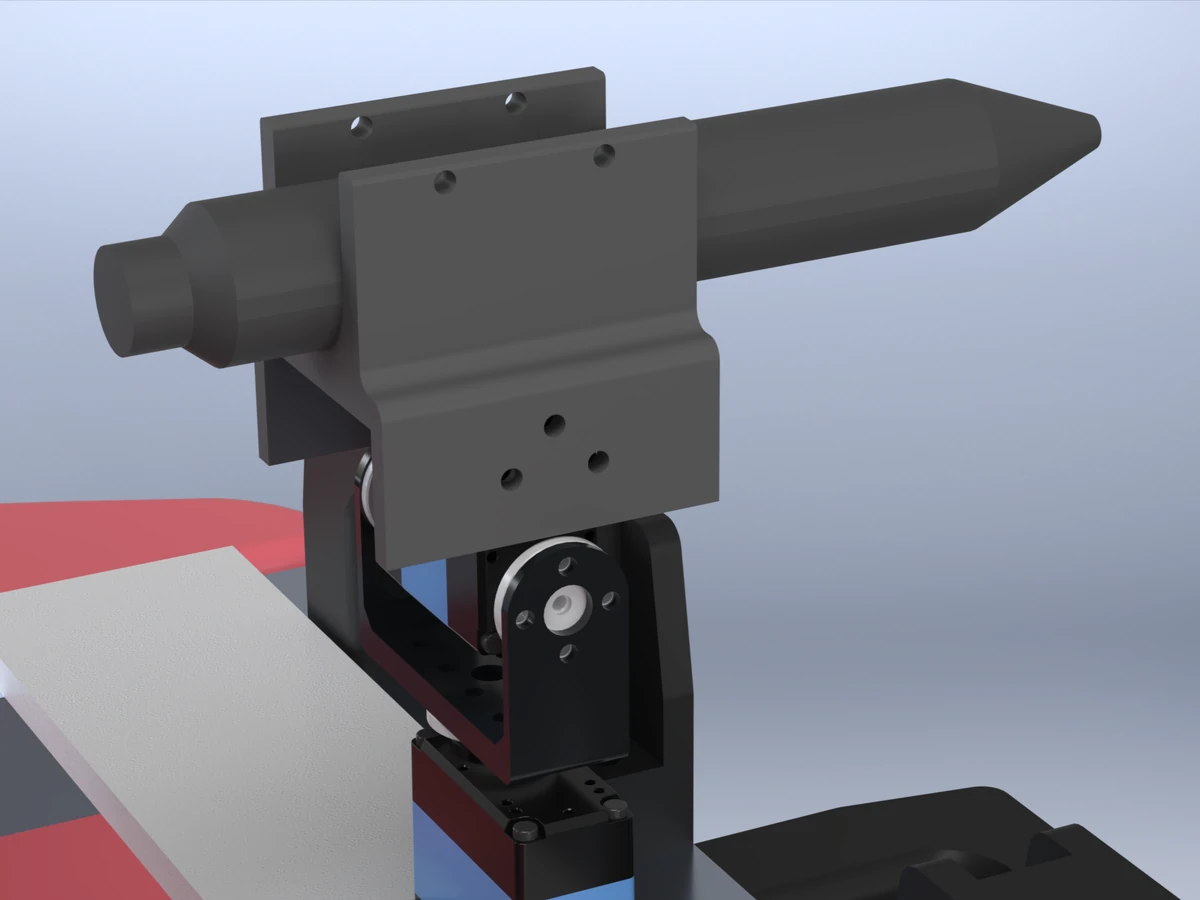
USV water nozzle and its mounting assembly

What’s on board.

Platform

  • BlueBoat twin-hull platform
  • Custom weatherproof electronics enclosure
  • Deck-mounted sensors and communications

Propulsion

  • Two axial stern thrusters
  • Two diagonal BlueRobotics T200 thrusters
  • Custom ribbed thruster mounts

Power system

  • Custom 12 V, 5 V and 3.3 V distribution board
  • Separate propulsion and electronics branches
  • Compute power retained during actuator inhibit

Control system

  • BlueRobotics Navigator with Raspberry Pi 4
  • ArduRover vehicle control
  • Custom four-thruster allocation in development

Navigation

  • Two Holybro H-RTK F9P GNSS receivers
  • Moving-baseline heading
  • Continuous local odometry for control

Onboard computer

  • NVIDIA Jetson Orin NX
  • Onboard perception and route planning

Perception sensors

  • Ouster OS0 scanning LiDAR
  • Two Basler ace 2 colour cameras
  • Separate geometric obstacle processing

Passive acoustics

  • Four Aquarian AS-1 hydrophones
  • Custom four-channel analogue front end
  • MCC USB-1808X simultaneous acquisition

Communications

  • airMAX shore radio link
  • 433 MHz SiK link to the UAV
  • WaterLinked M16 Extended acoustic modem

Water delivery

  • DC pump and forward nozzle
  • Water intake and hose assembly
  • Vessel positioning for nozzle alignment

Software

  • ROS 2 and Nav2
  • SmacPlanner2D and Regulated Pure Pursuit
  • Precision docking controller in development

Safety and status

  • Latched actuator-permission circuit (design)
  • Contactor-based power isolation (design)
  • Status light tower

One fleet. Three domains.